

 by

Learn how to dry fresh parsley using an oven or a food dehydrator. Both methods are easy ways to preserve parsley from your garden or leftover fresh parsley from the grocery store. Once dried, store the parsley in an airtight container and use it throughout the year in soups, sauces, casseroles, and other recipes.

Jump to:
Dried parsley
I grow Italian parsley in my garden every year, and by late summer the plants can be huge. I use as much fresh parsley as I can, but drying the extra is an easy way to preserve the harvest rather than let it go to waste.
I've dried parsley both in the oven and in a dehydrator, and both methods work well. The oven is a good option when I have a smaller amount to dry, while the dehydrator works well when I'm drying a larger harvest. On a hot summer day, I may choose the dehydrator simply because I don't want to turn on the oven.
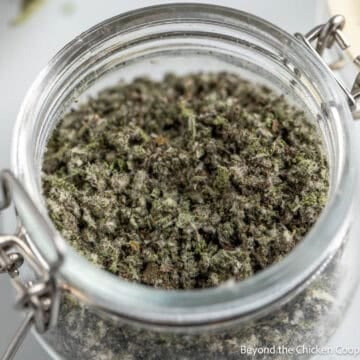
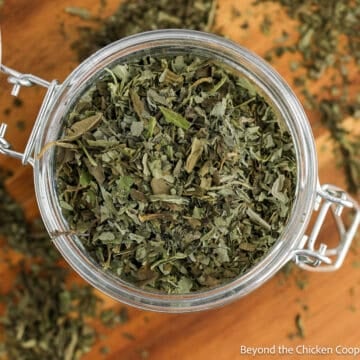
Once the parsley is completely dry, I crumble the leaves and store them in an airtight container. Then I have homegrown parsley ready to use throughout the winter.
Some recipes I add my dried parsley to include Zesty Italian Dressing, Baked Greek Chicken, and Dry Rubbed Wings.
Key ingredients

Use fresh, high-quality parsley. I used flat-leaf, Italian parsley, but any type of parsley will work.
Steps to dry parsley
In the oven
- Preheat oven to the lowest temperature, around 170°F.
- Wash the parsley in a bowlful of cool water.
- Shake off any excess water and then wrap loosely in a clean dish towel.
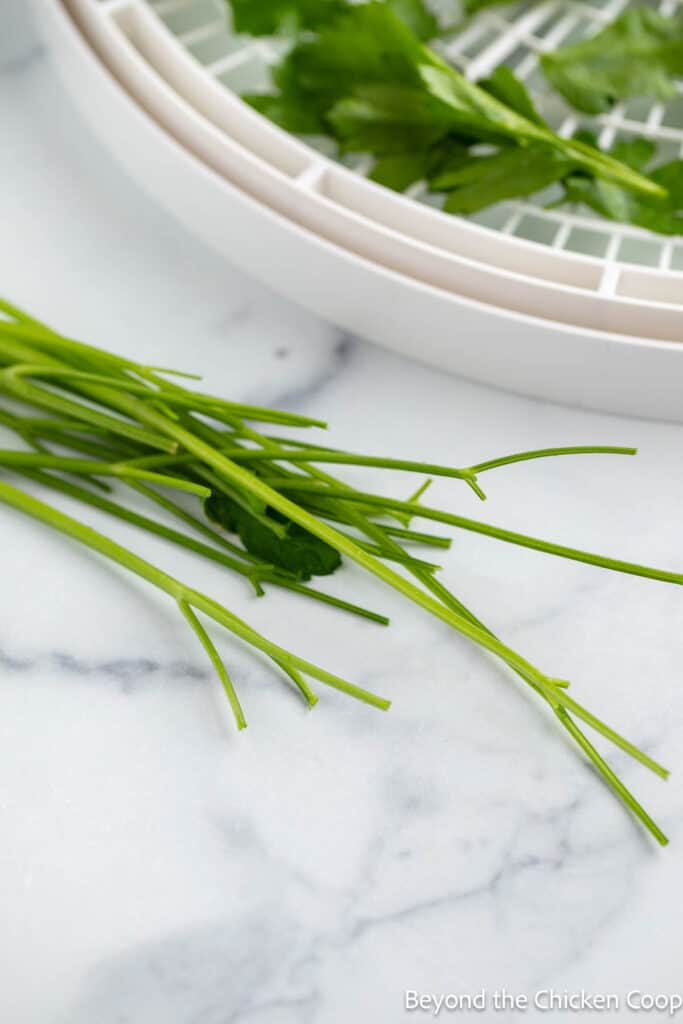
- Remove leaves from the stem.
- Place leaves on a baking rack over a baking sheet.
- Place in the oven for 30 minutes.
- Turn the heat off and leave the parsley in the oven for an additional 20-30 minutes until the leaves are dry and brittle.
- Remove from the oven and crumble the leaves into dried pieces.
- Store in an airtight container.


In the dehydrator
- Wash the parsley in a bowlful of cool water.
- Shake off any excess water and then wrap loosely in a clean dish towel.
- Remove leaves from the stem.
- Place leaves on the dehydrator tray.
- Set the temperature to 95°F and turn on the dehydrator.
- Dry until the leaves are dry and brittle. This can take between 8-12 hours.

How to Store Dried Parsley
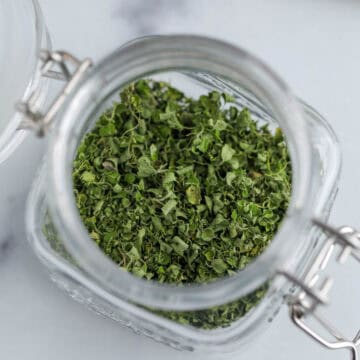
Store dried parsley in an airtight container in a cool, dry place away from direct sunlight. Make sure the parsley is completely dry before placing it in the container to prevent moisture from becoming trapped inside.
For the best flavor, use your homemade dried parsley within 6–12 months. Keep the leaves whole until you're ready to use them, or crumble them before storing for convenience.
Recipe tips
- Dry any amount of parsley you have available or that will fit on your baking rack or in your dehydrator.
- Drying time will vary depending on your dehydrator, how wet the parsley was to start, and the amount of parsley you are drying.
- It is okay to stop your dehydrator when the parsley is only partially dry and then turn it on later to continue drying. I've done this when I don't want to leave the dehydrator running overnight.
- Check for dryness. Parsley should be completely dry and crumble easily between your fingers before storing. If the leaves still feel soft or flexible, they need additional drying time.
- You can crumble with your hands to make smaller parsley flakes or you can pulse in a food processor.
More delicious dried herbs

If you make this recipe, I’d love to hear about it! Leave a comment below and snap a picture and tag me on Instagram @beyondthechickencoop
Check out all my recipes for preserving food!



How to Dry Parsley
Equipment
- Cookie Sheet
Ingredients
- 1 bunch fresh parsley (any amount works)
Instructions
In the Oven
- Preheat oven to the lowest temperature, around 170°F.
- Wash the parsley in a bowlful of cool water.
- Shake off any excess water and then wrap loosely in a clean dish towel.
- Remove leaves from the stem.
- Place leaves on a baking rack that is over a baking sheet.
- Place in the oven for 30 minutes.
- Turn heat off and leave the parsley in the oven for an additional 20-30 minutes until the leaves are dry and brittle.
- Remove from the oven and crumble the leaves into dried pieces.
- Store in an airtight container.
With a Dehydrator
- Wash the parsley in a bowlful of cool water.
- Shake off any excess water and then wrap loosely in a clean dish towel.
- Remove leaves from the stem. Place leaves on dehydrator tray.
- Set temperature to 95°F and turn on dehydrator.
- Dry until the leaves are dry and brittle. This can take between 8-12 hours.
- Crumble the leaves into small pieces and store in an airtight container.
Notes
-
- The recipe card timing reflects the oven method. Drying parsley in a dehydrator takes approximately 8–12 hours.
- Dry any amount of parsley you have available, or that will fit on your baking rack or in your dehydrator.
-
- Drying time will vary depending on your dehydrator, how wet the parsley was to start, and the amount of parsley you are drying.
-
- It is okay to stop your dehydrator when the parsley is only partially dry and then turn it on later to continue drying.
-
- You can crumble with your hands to make smaller parsley flakes ,or you can pulse in a food processor.
-
- Store in an airtight container.
Nutritional Disclaimer:
Nutritional information is provided as a courtesy and should only be construed as an estimate rather than a guarantee. To obtain the most precise nutritional information in a provided recipe, you should calculate the nutritional information with the exact ingredients you are using when preparing the recipe using your preferred nutrition calculator.

Leave a Reply