

 by
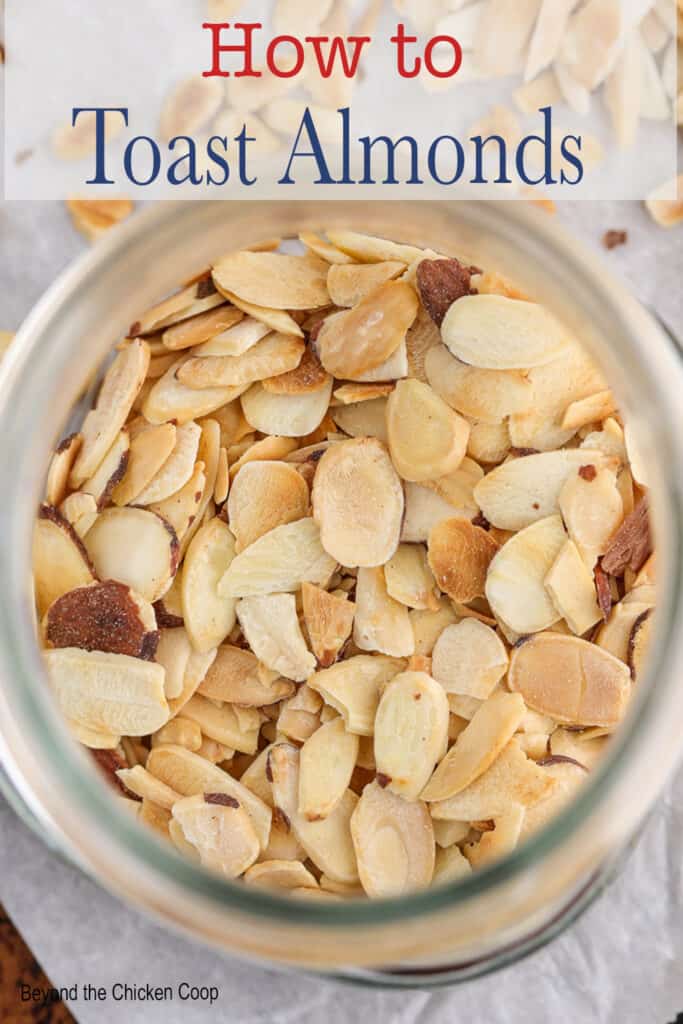
LLearn how to toast sliced or slivered almonds on the stovetop or in the oven. These simple methods bring out their nutty flavor and give them a golden color and crisp texture.
Use toasted almonds in salads, baked goods, or as a topping for vegetables. All you need is raw almonds and a dry skillet or baking sheet, with no oil required.

Toasting sliced and slivered almonds
Toasting almonds brings out their flavor and adds crunch to sweet and savory dishes. It takes just a few minutes, but watch closely because almonds can go from golden to burnt quickly.
I prefer the stovetop when toasting less than a cup of almonds. For larger amounts, I use the oven so I can spread them out on a baking sheet.
Sliced almonds are thin, flat pieces, while slivered almonds are thicker strips. Sliced almonds generally toast more quickly, so use their color and nutty aroma to judge when they’re ready.
What you'll need to Toast Almonds
- Almonds: Use raw, unsalted sliced or slivered almonds. Check that they smell and taste fresh before toasting.
- For the stovetop: Use a heavy skillet with enough room to spread the almonds in a single layer. You’ll also need a heatproof spatula for stirring.
- For the oven: Use a rimmed baking sheet. Parchment paper is optional, but makes transferring the almonds easier.
- A plate or tray: Transfer the toasted almonds from the hot pan immediately to prevent them from browning further.
How to toast almonds on the stovetop
The stovetop works well for small batches of sliced or slivered almonds.
- Place the almonds in a dry skillet, spreading them in a single layer. No oil or butter is needed.
- Heat over medium-low heat, stirring or shaking the pan frequently so the almonds toast evenly.
- Watch closely as they begin to color. The almonds are ready when they’re lightly golden and smell nutty. Sliced almonds may brown at the edges first.
- Immediately transfer the almonds to a plate or tray. Don’t leave them in the hot skillet, where they’ll continue to brown.
- Allow them to cool before using or storing. They’ll become crisper as they cool.
The time will vary depending on your skillet, stove, and the thickness of the almonds. Use color and aroma as your main guides.


How to toast almonds in the oven
The oven works well for larger batches of sliced or slivered almonds.
- Preheat the oven to 350°F.
- Spread the almonds in a single layer on a rimmed baking sheet. Line with parchment paper if desired. No oil or butter is needed.
- Bake for 6–10 minutes, stirring halfway through. Begin checking at 6 minutes, especially if using thinly sliced almonds.
- Remove from the oven when the almonds are lightly golden and smell nutty.
- Immediately transfer the almonds to a plate or tray so they don’t continue browning on the hot baking sheet. Allow to cool before using or storing.
The exact time will vary with the thickness and amount of almonds and your oven. Watch closely during the final few minutes.

Tips for perfectly toasted almonds
- Toast similar pieces together. Sliced and slivered almonds can brown at different rates, so toast them separately.
- Avoid overcrowding. Keep the almonds in a single layer. Use batches on the stovetop if needed.
- Stay nearby. Almonds brown quickly once they start to toast.
- Check both color and aroma. Look for a light golden color and a nutty smell rather than relying only on the timer.
- Cool before tasting for crunch. Warm almonds may seem slightly soft. They become crisper as they cool.
Ways to use toasted almonds
Sprinkle toasted almonds over salads, roasted vegetables, or casseroles for extra crunch. Try them in my green beans almondine or as part of the buttery topping for trout almondine. They’re also delicious layered into a Greek yogurt parfait or scattered over oatmeal and vanilla ice cream.
How to store toasted almonds
Allow the almonds to cool completely before storing so trapped warmth doesn’t create condensation and soften them.
Store in an airtight container in a cool, dry place for up to two weeks. For longer storage, freeze in a freezer-safe container or bag for up to three months for the best quality.
Toasted Almonds FAQs
No. You can toast sliced or slivered almonds in a dry skillet or on a baking sheet without adding oil or butter.
Stir frequently on the stovetop and check often toward the end of oven toasting. As soon as the almonds are lightly golden and smell nutty, transfer them to a plate or tray. Leaving them in the hot pan can cause them to burn.
Allow them to cool completely before checking their texture. Warm almonds may feel slightly soft, but they should become crisper as they cool.
For another simple way to add flavor and crunch, learn how to toast pecans. You’ll also find more useful techniques in my collection of kitchen and baking basics.

If you make this recipe, I’d love to hear about it! Leave a comment below and snap a picture and tag me on Instagram @beyondthechickencoop


How to Toast Almonds (Sliced or Slivered)
Equipment
- 10 Inch Skillet
- Cookie Sheet
Ingredients
- ½ cup almonds (sliced or slivered)
Instructions
Stovetop Method
- Place almonds in a dry skillet. Don't add any oil.
- Heat over medium to medium-low heat.
- Move the almonds around every few seconds. Just slide the pan around and give it a little shake to flip the almonds or use a heat-proof silicone spatula. Once the pan is warm, this takes just 1-2 minutes.
- As soon as the almonds are brown, remove them from the pan onto a plate.
Oven Method
- Place almonds on a baking sheet. I like to use parchment because it makes removing the almonds easy.
- Put baking sheet in a preheated 350° oven for 6-10 minutes, flipping halfway through cooking.
- Once the almonds are brown, remove them from the oven and place almonds on a clean plate
Notes
-
- Toast similar pieces together. Sliced and slivered almonds can brown at different rates, so toast them separately.
- Avoid overcrowding. Keep the almonds in a single layer. Use batches on the stovetop if needed.
- Stay nearby. Almonds brown quickly once they start to toast.
- Check both color and aroma. Look for a light golden color and a nutty smell rather than relying only on the timer.
- Cool before tasting for crunch. Warm almonds may seem slightly soft. They become crisper as they cool.
Nutritional Disclaimer:
Nutritional information is provided as a courtesy and should only be construed as an estimate rather than a guarantee. To obtain the most precise nutritional information in a provided recipe, you should calculate the nutritional information with the exact ingredients you are using when preparing the recipe using your preferred nutrition calculator.


Leave a Reply